"Practising Transnational Politics. Preparing and Participating in UN and EU Simulations" - New handbook published
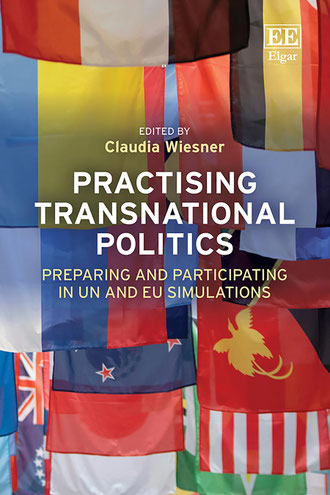
This informative book prepares scholars, university staff and students for simulations of the United Nations and the European Union. It provides essential knowledge, including introductions into
the institutions, case studies, reflections on active learning, as well as concrete teaching modules and practices.
Chapters present essential background knowledge as well as an actionable course plan and syllabus that allows teachers to prepare for and organise UN and EU simulations. The chapter contents are
designed in order to support students to successfully act as delegates for an assigned country and thus gain a unique understanding of political practice. Ultimately, the book transmits how
political action shapes the practice of transnational politics.
Practising Transnational Politics is a valuable resource for scholars, students and educators of international relations, politics, EU studies and public policy looking to enhance their
engagement in the UN, the EU, and simulations. It is also beneficial for those interested in participating in or preparing others for Model United Nations, Model European Union or other model
simulations.
Available open access here
EfMUN 2026
A weekend of international negotiations
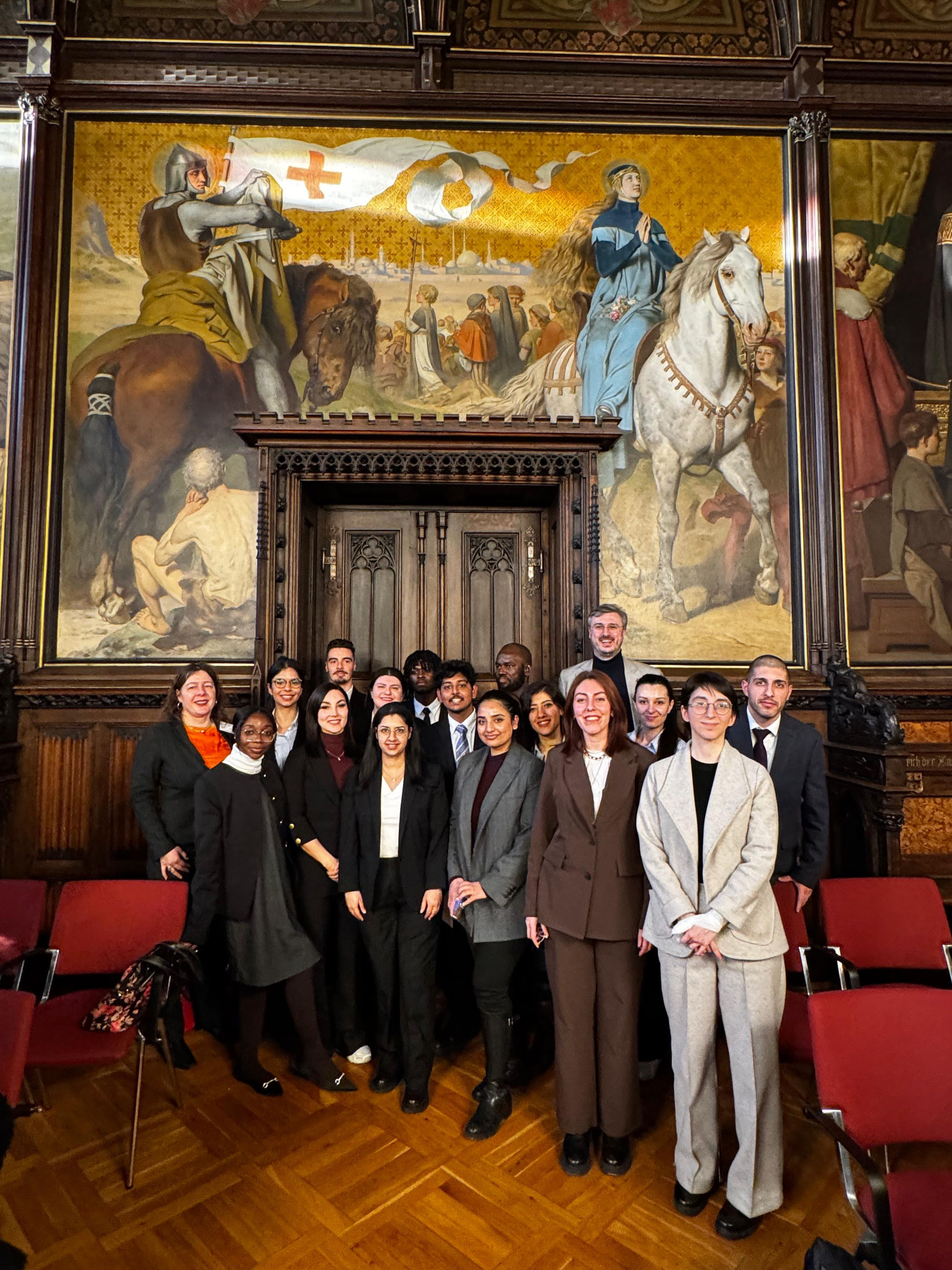
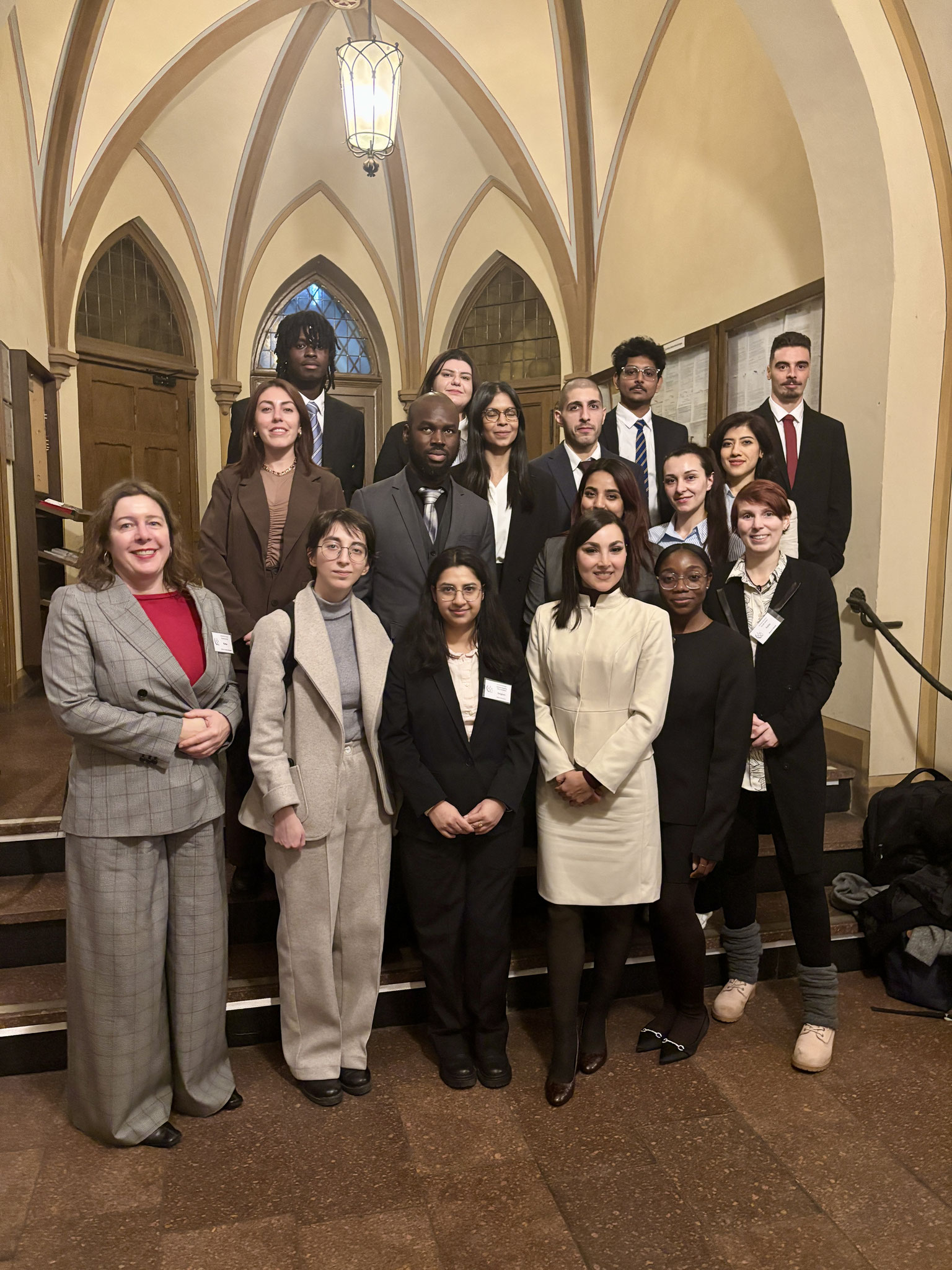
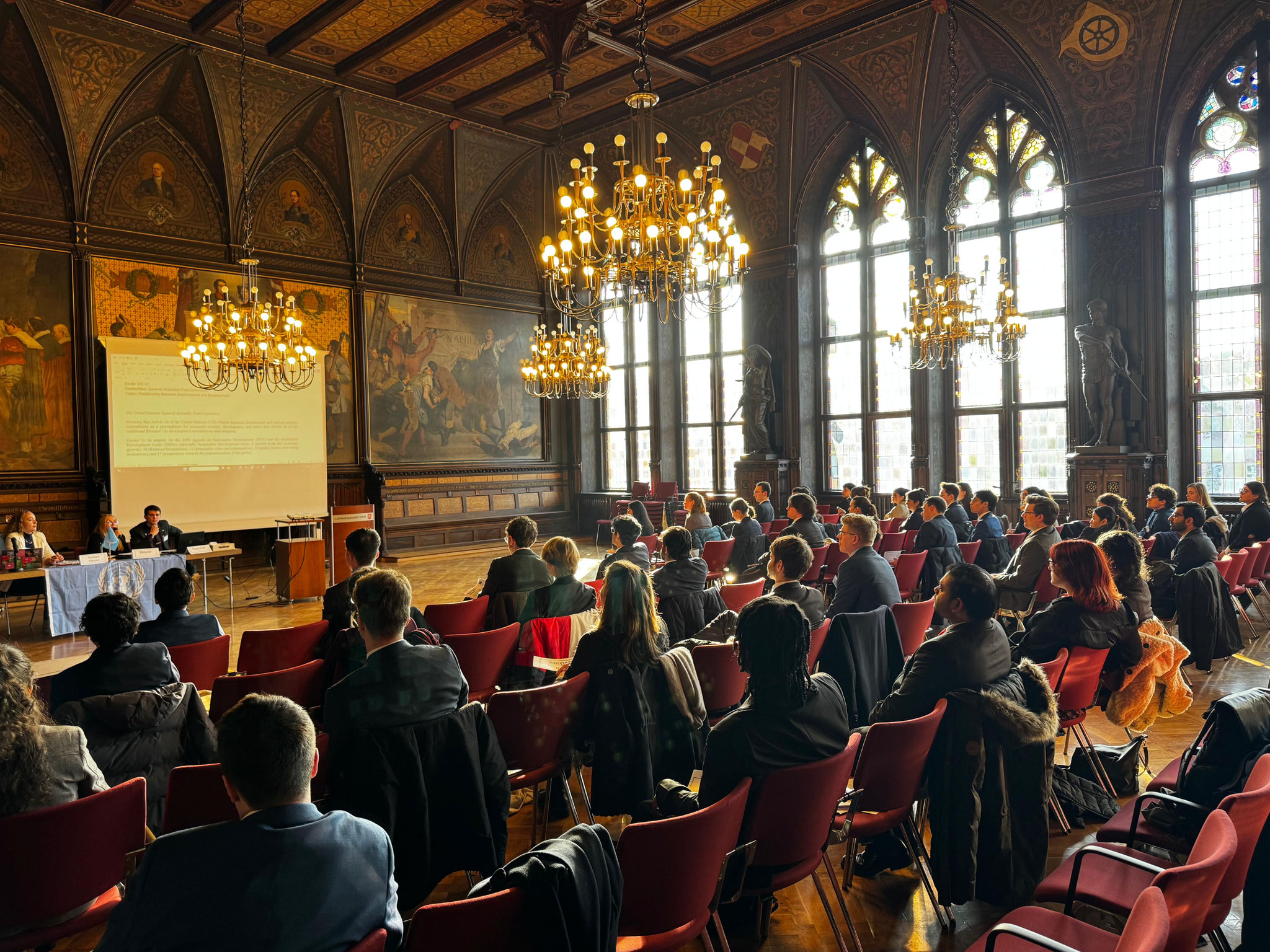
15 M.A. students successfully participated in EfMUN 2026
Recent topics, important issues, negotiations and speeches, this is was EfMUN 2026 was about. Among the Fulda delegates, who had prepared since the beginning of the Summer term 2025 for the Model United Nations conference, were 15 Master students from the Department of Social and Cultural Sciences. During the three-day conference, they represented countries such as the United Kingdom or Greece in the Security Council, Italy, Belgium, and Brazil in the General Assembly, and Cabo Verde, Romania, and Colombia in the Commission on the Status of Women. “EfMUN reminded me that diplomacy is not about defending comfort zones but about rigorously engaging with ideas that challenge our own values and doing so with striking the right balance of discipline with empathy and precision,” said Danisha Thadani, who represented Italy in the General Assembly, after the intensive weekend.
Across the three days of the conference they discussed the following topics: In the Security Council 1. The Situation in Sudan and South Sudan and 2. Conflict and Food Security. In the Commission on the Status of Women (CSW) 1. Achieving Gender Equality and the Empowerment of Rural Women and Girls and 2. Promoting Gender Equality in Access to Healthcare and in the General Assembly (GA 1) 1. Relationship between Disarmament and Development and 2. The Role of Science and Technology in International Security and Disarmament. A special honor went to two Fulda MAHRS students, Geevar Shaju representing Brazil in the GA and Emmanuel Ifeanyi Nweke representing the United Kingdom in the Security Council, who won the Position-Paper-Award.
The conference was opened on Friday afternoon with welcoming notes by Mayssa Helwa, Chair of the Foreigners' Advisory Council of Erfurt. She highlighted “building bridges” as her guiding principle. Pointing out that those need to be build “between people, cultures, institutions, and perspectives”, and that EfMUN stands for precisely that idea. Helwa underlined: “This is not only about political processes or formal procedures, but above all about something very essential: dialogue, responsibility, and mutual understanding.” And with a short welcome by Prof. Dr. Achim Kemmerling, Vice Dean for Internationalization and Advanced Education of the Faculty of Economics, Law and Social Science and Vice Director of the Willy Brandt School for Public Policy.
The participation of the15 students at EfMUN was prepared and organized by Prof. Dr. Claudia Wiesner and Muriel C. Wenzel in a two-semester seminar and as faculty advisors. Marek Liwoch joined the delegation as faculty advisor as well.
MUN is part of the curricula of ICEUS and MAHRS and organized by Prof. Dr. Claudia Wiesner.